Huwebes, Setyembre 15, 2016

Lesson 7

 “Direct Purposeful and Beyond”

·        From the rich experiences that our senses bring, we construct the ideas, the concepts, the generalizations that give meaning and order to our lives.
·        Direct experiences are first hand experiences that serve as the foundation of learning. The opposite of direct experiences are indirect or vicarious experiences.
·        Direct experiences lead us to concept formation and abstraction. We should not end our lessons knowing only the concrete. We go beyond the concrete by reaching the level of abstract concepts.
·        Direct experiences are basically what the students can learn by doing it. This way of teaching is known to be the most effective way of teaching the students because experiences are the best teacher.
What are referred to as direct, purposeful experiences?
·        These are our concrete and first hand experiences that make up the foundation of our learning.
·        These are the rich experiences that our senses bring from which we construct the ideas, the concepts, the generalizations that give meaning and order to our lives (Dale,1969). They are sensory experiences.
·        Examples of direct activities
-         Preparing meals
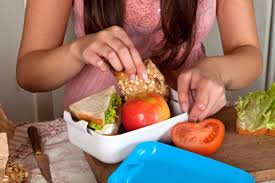
Image result for preparing meals

-         Doing a power point presentation
  Image result for making a powerpoint presentation

-         Delivering a speech
Image result for delivering a speech
·        In contrast, indirect experiences of other... people that we observe, read or hear about.
·       They are not our own self-experiences but still experiences in the sense that we see, read and hear about them. They are not first-hand but rather vicarious experiences.
Why are these direct experiences described to be purposeful?
·        They are experiences that are internalized in the sense that these experiences involve the asking of questions that have significance in the life of the person undergoing the direct experience.
·        These experiences are undergone in relation to a purpose, i.e. learning

·        It is done in relation to a certain learning objective. 

Lesson 8

Teaching with Contrived Experiences

INTRODUCTION
If for one reason or another, we cannot employ direct experiences as materials for instruction, let us make use of an “edited” version of direct experience- the contrived experiences.
ABSTRACTION
The model of the atom, the globe, the planetarium the stimulated election process and the preserved specimen fall under contrived experiences, the second band of experiences in Dale’s Cone of Experience.
Image result for planetarium  Image result for contrived experiences
Contrived Experiences- these are “edited” copies of reality and are used as substitutes for real things when it is not practical or do the real thing in the classroom. These are designed to stimulate to real-life situation.

These include:
Model- is a reproduction of a real thing in a small scale, or large scale or exact size. It is a substitute for a real thing which may or may not be operational.
Mock-up- is an arrangement of a real device or associated devices, displayed in such a way that representation of reality is created. The mock-up may be simplified in order to emphasize certain features.
-is a special model where the parts of a model are single out, heightened and magnified in order to focus on that part or process under study.
Specimen- is any individual or item considered typical of a group, class or whole.
Objects- may also include artifacts displayed in a museum or objects displayed in exhibits or preserved insect’s specimen in science.
Simulation- is a representation of manageable real event in which the learner is active participants engage in learning a behavior in or in applying previously acquired skills or knowledge.
-simulation need not have a winner
-seem to be more easily applied to study of issues rather than to process.
Games- played to win.
Image result for example of games  
           -are used of any of these purposes:
To practice and/or to refine knowledge/skills already acquire
To identify gaps or weaknesses in knowledge or skills
To serve as a summation or review
To develop new relationships among concepts and principles

Why do we make use of contrived experience?
We use models, mock-ups, specimen and objects to:
1.     Overcome limitations of space and time
2.     To edit “reality” for us to be able to focus on parts or a process of a system that we intend to study
3.     To overcome difficulties of size
4.     To understand the inaccessible, and
5.     To help students to understand abstractions

Lesson 9

Teaching with Dramatized Experiences

Dramatic- Is something that is stirring or affecting or moving.

Formal Dramatized Experience
o   Plays- Depict life, character, or culture or a combination of all three.
o   Pageants- Usually community dramas that are based on local history presented by local actors.

Less Formal Dramatized Experiences
o   Pantomime- Is the art of conveying a story through bodily movements only.
o   Tableau- (French word means picture) is a picture-like scene composed of people against a background.
o   Puppets- Unlike regular stage play, it can present ideas with extreme simplicity, without elaborate scenery or costume yet effective.
-         An inanimate object, constructed of wood, cloth, plastic, card board.
Types of Puppet

o   The Marionette- Are generally fashioned from wood and resemble a human body.
   
o   Shadow Puppets- Similar to the marionette but less sophisticated, is the shadow puppet. Are generally flat characters created from heavy paper or card board.

Image result for shadow puppets
o   Stick Puppets- As simple as a styro foam ball head attached to a stick or a two-dimensional picture attached to a stick.
Image result for stick puppets images

o   Hand Puppets- Most common type of puppet. They are relatively simple to create.

Image result for hand puppets  Image result for hand puppets
o   Mouth Puppets- Are distinguished from other puppets in that they have movable mouths, thus allowing the puppets to talk more realistically.

Image result for mouth puppets    Image result for mouth puppets
o   Rod Puppets- Flat cut out figures tacked to a stick, with one or more movable parts and operated from below the stage level wire rods or slender stick.

Image result for rod puppets  

o   Glove and Finger Puppets- Make used of old gloves to which small costumed figure are attached.
Image result for glove and finger puppet 

Lesson 10

Demonstration in Teaching
(Good demonstration is Good communication)
*   In demonstration, you have to use both verbal and action communication for your learners to understand what you are talking and what you are showing to them. But, a good demonstrator must present or show how a specific thing is done while following it up with an explanation. It is best for your learners to see it in actual or to do it while showing it, for them to really understand it. To be a good demonstrator you have to make your demonstration lively and interesting to get the attention of your audience so that, they would be able to participate. Once they have been participated with the topic, you can probably say that you’re a good demonstrator because there is a communication between you and your audience.
DEMONSTRATION
§  Is showing how a thing is done emphasizing the salient merits, utility and efficiency of concept, a method or a process or an attitude.
§  Demonstration is a method of presentation of skill which which shows a particular procedure is performed.
§  Demonstration increase interest of students and persuade them to adopt recommended practices.
§A good demonstrator must be accompanied by some visuals.

Guiding principles that we must observe in using demonstration as a teaching-learning experience: Edgar Dale (1969)
1.     Establish rapport.
2.     Avoid the COIK fallacy (Clear Only If Known).
3.     Watch for key points.
Planning and Preparing for Demonstration Brown (1969)
1.     What are our objective?
2.     How does our class stand with respect to these objectives?
3.     Is there a better way to achieve ends?
4.  Do you have  access to all necessary materials and equipment to make the demonstration?
5.     Are familiar with the sequence and content of the proposed demonstration?
6.     Are the time limits realistic?
Several points to observe in the actual conduct of demonstration: Dale(1969)
1.     Set the tone for good communication.
2.     Keep your demonstration simple.
3.     Do not wander from the main ideas.
4.     Check to see if your demonstration is being understood.
5.     Do not hurry your demonstration.
6.     Do not drag out your demonstration.
7.     Conclude with a summary.
8.     Hand out written materials at the conclusion.
What questions can you ask to evaluate your classroom demonstration?Dale (1969)
1.     Was your demonstration adequately and skillfully prepared?
2.     Did you follow step-by-step plan?
3.     Was the demonstration itself correct?
4.     Did you keep checking to see that all your students where concentrating on what you were doing?
5.     Could every person see and hear?
6.     Did you help students do their own generalizing?
7.     Did you take enough time to demonstrate the key points?
8.     Did you review and summarize the key points?
9.     Did your students participate in what you were doing by asking thoughtful questions at the appropriate time?
10.                         Did your evaluation of students learning indicate that your demonstration achieved its purpose?