Teaching with Visual Symbols
A. DRAWINGS
A drawing may not be the real
thing but better to have a concrete visual aid than nothing.
B. CARTOONS
Another useful visual symbols
that can bring novelty to our teaching is the cartoon.
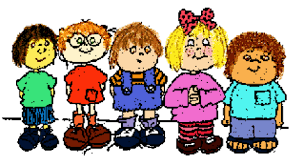
C.STRIP DRAWINGS
These are commonly called comics
or comic strips.

It is any line drawing that shows
arrangement and relations as of parts to the whole, relative values, origins
and development, chronological fluctuation, distribution.

Types of Diagram
-AFFINITY DIAGRAM
Used to cluster complex apparently unrelated data into
natural and meaningful groups.

-TREE DIAGRAM
Used to chart out, in increasing
detail, the various task must be acccomplished to complete a project or achieve specific
objective.

-FISHBONE DIAGRAM

It is a structured form of brainstorming that graphically shows the relationship of posssible cause and subcauses directly related to an identified effect/problem.
E. CHARTS
A chart is a diagrammatic
representation relationships among individuals within an organization.
-Time chart – is a tabular time chart that presents data in ordinal
sequence.

-Tree or stream chart – depicts development, growth and change by beginning with a single course (the trunk) which spreads out into many branches: or by beginning with the many tributaries which then converge into a single channel.-Flowchart – is a visual way of charting or showing a process from beginning to end. It is a means of analyzing a process. By outlining every step in a process, you can begin to find inefficiencies or problem.
-Organizational chart – shows how
one part of the organization relates to other parts of the organization.
-Comparison and Contrast chart
- Pareto chart – is a type of bar chart, prioritized in descending order of magnitude or importance from left to right. It shows at a glance which factors are occurring most.
- Pareto chart – is a type of bar chart, prioritized in descending order of magnitude or importance from left to right. It shows at a glance which factors are occurring most.
F. GRAPHS
There are several types of graphs. They are: 1) Circle or pie graph, 2)
bar graph, 3) pictorial graph and 4) line graph
-Pie or circle graph –
recommended for showing parts of whole.
-Bar graph – used in comparing
the magnitude of similar items at different ties or seeing relative sizes of
the parts of a whole.
-Pictorial graph – makes use of
picture symbols.
-Graphic organizers – You met
several graphic organizers in your subject, Principles of Teaching.
Poster is any piece of printed paper designed to be attached to a wall or vertical surface.[1] Typically posters include both textual and graphic elements, although a poster may be either wholly graphical or wholly text. Posters are designed to be both eye-catching and informative. Posters may be used for many purposes.

Poster is any piece of printed paper designed to be attached to a wall or vertical surface.[1] Typically posters include both textual and graphic elements, although a poster may be either wholly graphical or wholly text. Posters are designed to be both eye-catching and informative. Posters may be used for many purposes.


Walang komento:
Mag-post ng isang Komento